
Dr. Carlotta Nedbal
With abstract submission now closed, the ICE26 scientific programme is taking shape. The second edition of the International Conference on Endourology will be held in Valencia, Spain on 8-10 October, 2026.
One of the major topics to be addressed in Valencia is the introduction of artificial intelligence to urology, and endourology in particular. We spoke to Dr. Carlotta Nedbal (IT) who will be co-chairing a session on AI and other new technologies for endourologists on the first day of ICE26. The session covers AI, endourological applications of robotics, virtual and augmented reality and the current state of telesurgery.
AI and urology
“In recent years, AI has been quickly moving from bench to bedside in endourology. We are seeing it impact automated stone analysis, real-time fluoroscopy dose reduction, and intelligent intraoperative surgical guidance. It acts as an active digital assistant.”
“As urologists we have the responsibility to our patients and core concerns about AI focus on accountability, ‘black box’ algorithmic transparency, and data privacy.”
“Urologists may wonder: if an AI-driven tool miscalculates a stone volume or misidentifies anatomy during automated laser settings, where does clinical liability fall? However, if properly integrated, I think AI is definitely a ‘help’ rather than just a ‘hype’. We will be covering all these points in our session.”
- Dr. Nedbal wrote in more detail about urological applications for AI in the EAU26 Congress News.
Robotics entering endourology
“While established multiport systems by Intuitive and Medtronic dominate general pelvic urology, endourology is witnessing a more specialised boom. In our session at ICE26 we are examining the emergence of dedicated, flexible robotic platforms specifically engineered for retrograde intrarenal surgery (RIRS) and advanced ureteroscopy, alongside automated puncture, and suction/pressure-controlled systems for PCNL. These specialised systems aim to reduce surgeon fatigue, increase precision, and minimise radiation exposure.”
Augmented Reality (AR)
“I am particularly excited about the convergence of AR and AI data. Merging preoperative 3D reconstructive imaging directly onto the surgeon’s display during live endourological procedures would be a total game-changer for complex stone cases and BPH therapy. I am eager to see what news our presenters will bring to the table.”
Enthusiasm and caution
“In our department at the San Gerardo Hospital in Monza, we approach these developments with both enthusiasm and caution. We eagerly pilot new technology, trying to integrate AI especially in the most straightforward tasks, but we maintain a strict, data-driven evaluation process to ensure it genuinely improves patient safety and clinical outcomes before full adoption.”
Building on Rome
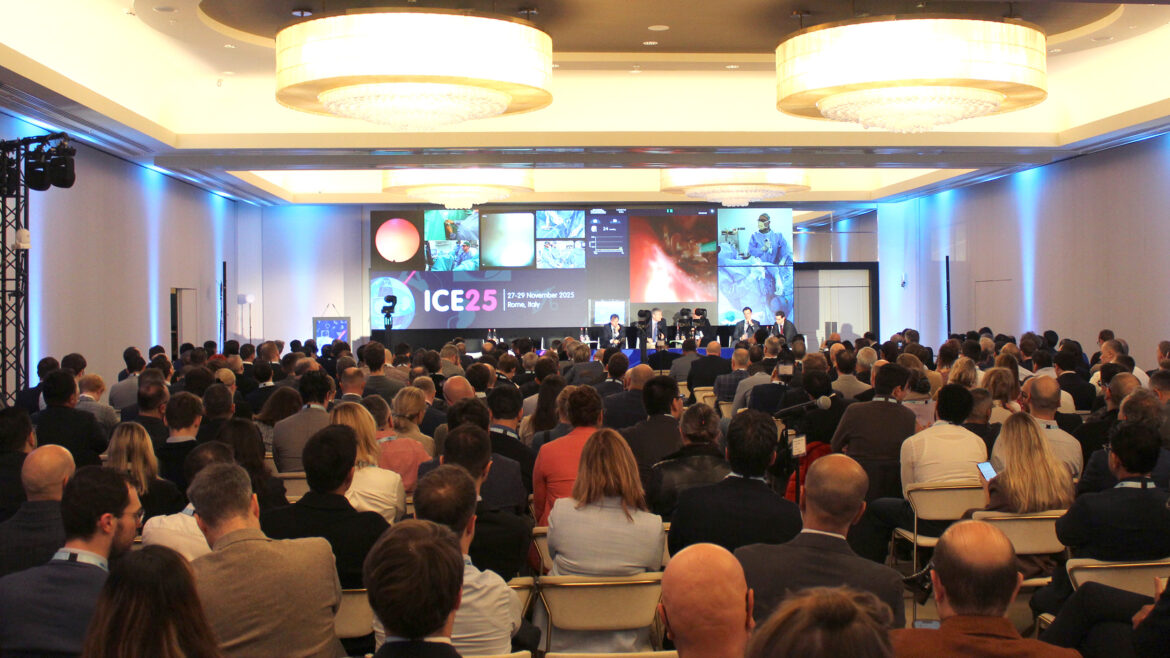
“Last year’s inaugural edition of ICE in Rome was a fantastic success, blending highly dynamic scientific content with an innovative ‘as-live’ unedited surgical format. For ICE26 in Valencia, my expectation is that we will push the envelope even further, moving past the initial proof-of-concept phase of these new technologies and highlighting how they are actively reshaping everyday clinical practice.”
- Registration is currently open for ICE26! The regular fee is available until 24 September.
- You can also book discounted accommodation in Valencia via the ICE26 website.