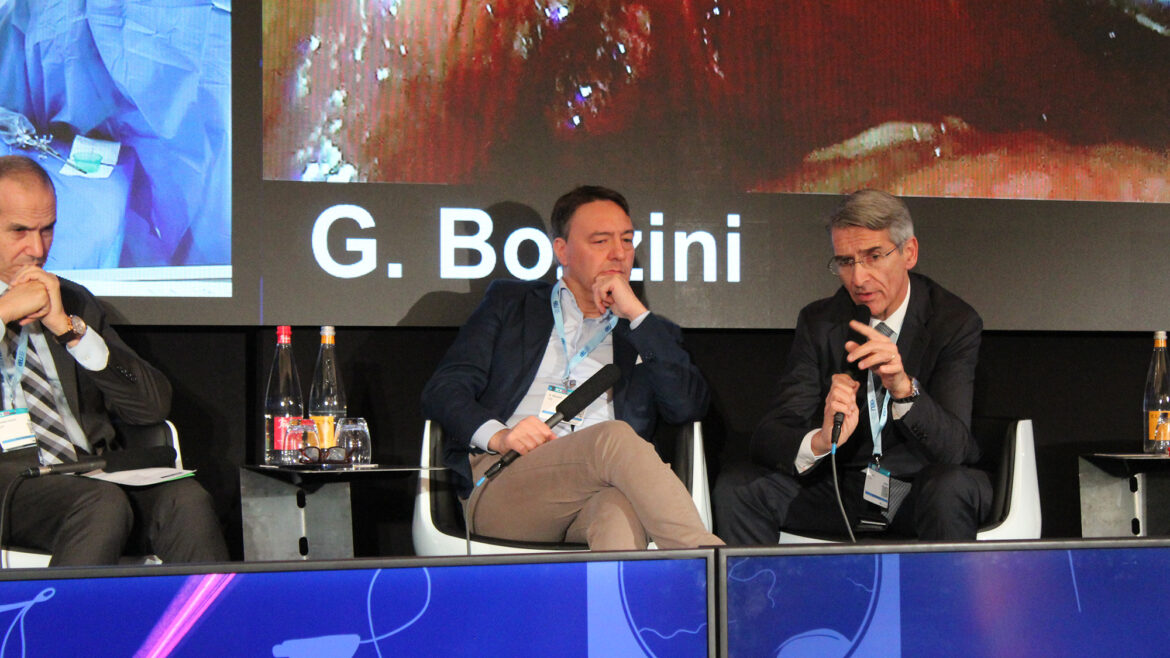
A brand-new EAU event that attracts over 1000 participants from nearly 80 countries can clearly be considered a success for the EAU Section of Endourology. ICE25 took place in Rome on 27-29 November of this year and the sights are already set on an improved version in 2026.
In this interview, Endourology Section chair Prof. Olivier Traxer (Paris, FR) reflects on the bringing to a close of this first International Conference on Endourology and the ambitions for 2026.
How do you look back on this first edition of ICE?
Personally, I am very happy with how it went these past few days in Rome. I did not expect such a big success. Talking to attendees, the companies that are involved, the faculty, so many people with positive reactions. I’ve organised many meetings in my life, but it’s rare for the feedback to be so unanimous. Organising the meeting was a challenge, and the successful result is the success of a big team. I’m really happy with how the Endourology Section pulled together, people were so motivated to make this a success. ICE illustrates the spirit of the endo section.
The success is not only in the scale of the conference but also in the scientific highlights. The sessions we had here are very different compared to earlier or other endourology meetings. They were of a very high level in terms of scientific content and people recognise that.
At this meeting, I was really feeling something dynamic, and young. A real rejuvenation. We received big support of the companies and they also contributed to this atmosphere.
Ahead of the conference, you had a strong view about how the semi-live surgery should go. How did that pan out?
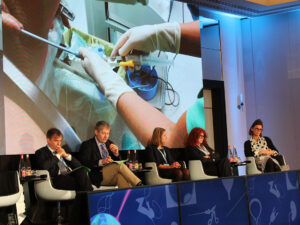
It was a good concept, to organise these pre-recorded cases “as live”. Surgeons cannot choose the “right” patient, cannot edit the video or cherry-pick, it was one shot. If everything was not perfect, we use the case like that.
Also the fact that we recorded all of the cases with the same team, in the same format, with the same AV team, this gives us a very consistent result. I think the format is good, it was well-received and it’s something we will reproduce at future meetings.
The “Best Endourologist” competition was also a new element in the scientific programme, how was that received by the participants and the audience?
We saw tremendous excitement in the audience. I think these sessions on the first two days were a nice experience for all contestants. We all know each other, we’re good friends, so it was a friendly competition.
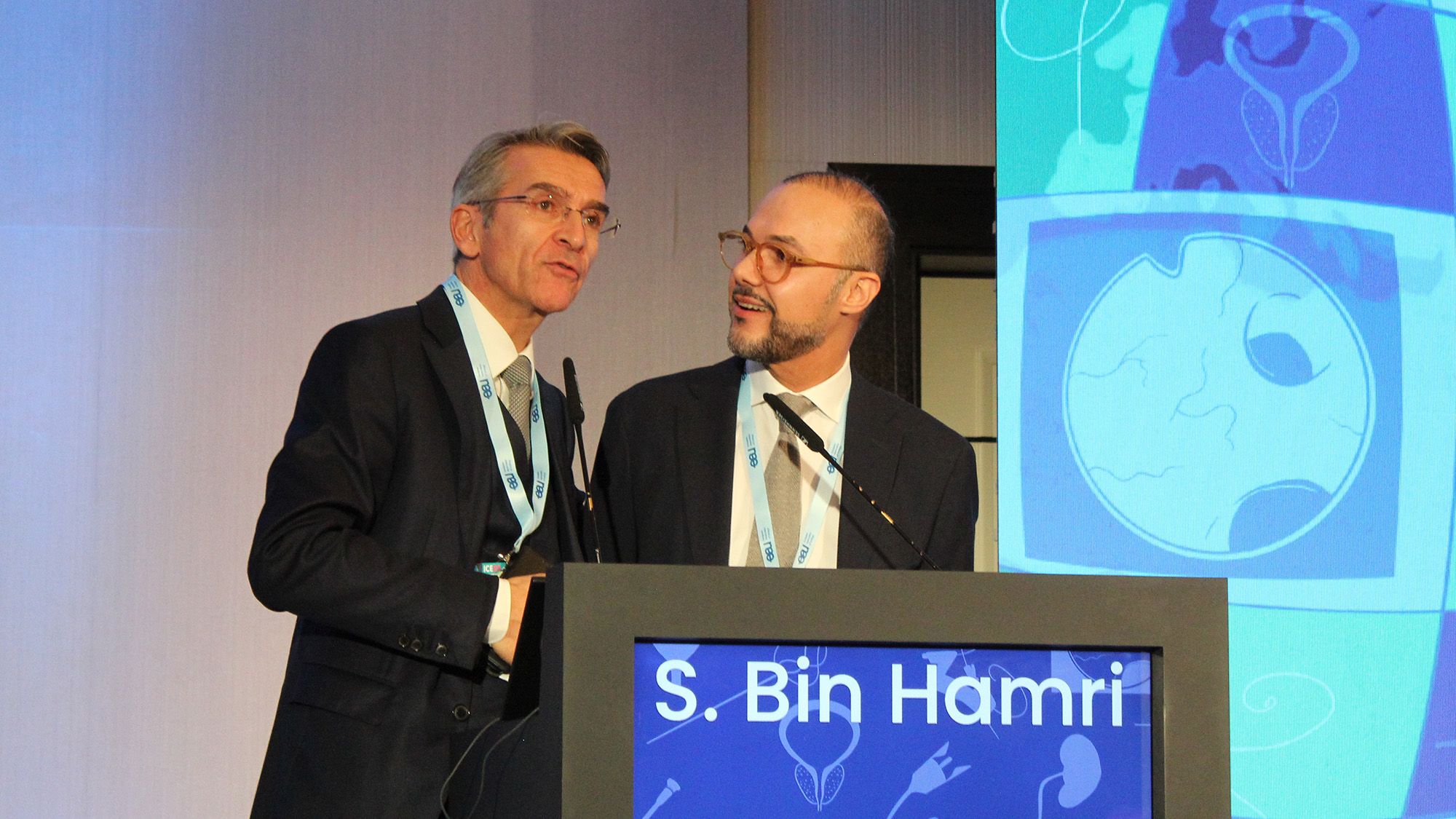
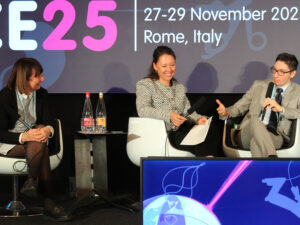
Prof. Traxer asks a probing question to Dr. Bin Hamri, one of the contestants of the “Best Endourologist 2025” competition.
This is also more than just a game, in a way it tests what we are doing every day as educators. In the OR, in the clinic, when we discuss with residents or fellows, they are asking us questions on a great diversity of topics. They put us on the spot, you have no time to prepare slides, or tell them to come back in a week. You have to be clear in your mind and give them the right or at least best answer. Maybe the answer is not exhaustive, maybe you miss a point, but the mission is to give some good messages immediately. This skill is what we tried to evaluate with the “Best Endourologist” competition.
For me it was very interesting to see how people took the same subject but used different ways to explain it. The participants did a great job, and the audience really was engaged and voted actively.
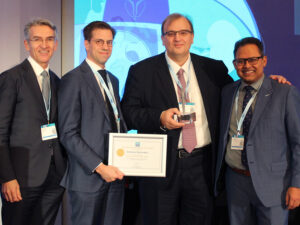
The Endourology Section used this meeting to acknowledge people who have contributed immensely to endourology, over the past year and historically speaking. Dr. Gregory Altshuler was acknowledged as a pioneer of laser technology and its application in urology. On stage he also mentioned your involvement in this development, could you tell us a bit more about this?
Dr. Altshuler was a Professor of Laser Physics in Leningrad during the Soviet Union, he was well known at the time. He emigrated to the United States and continued his research there. For me it was important to introduce Gregory in the urology field. He did so much, that no one knows about. He’s a wonderful person, and I was fortunate to meet him. He works for a company but is still a scientist first.
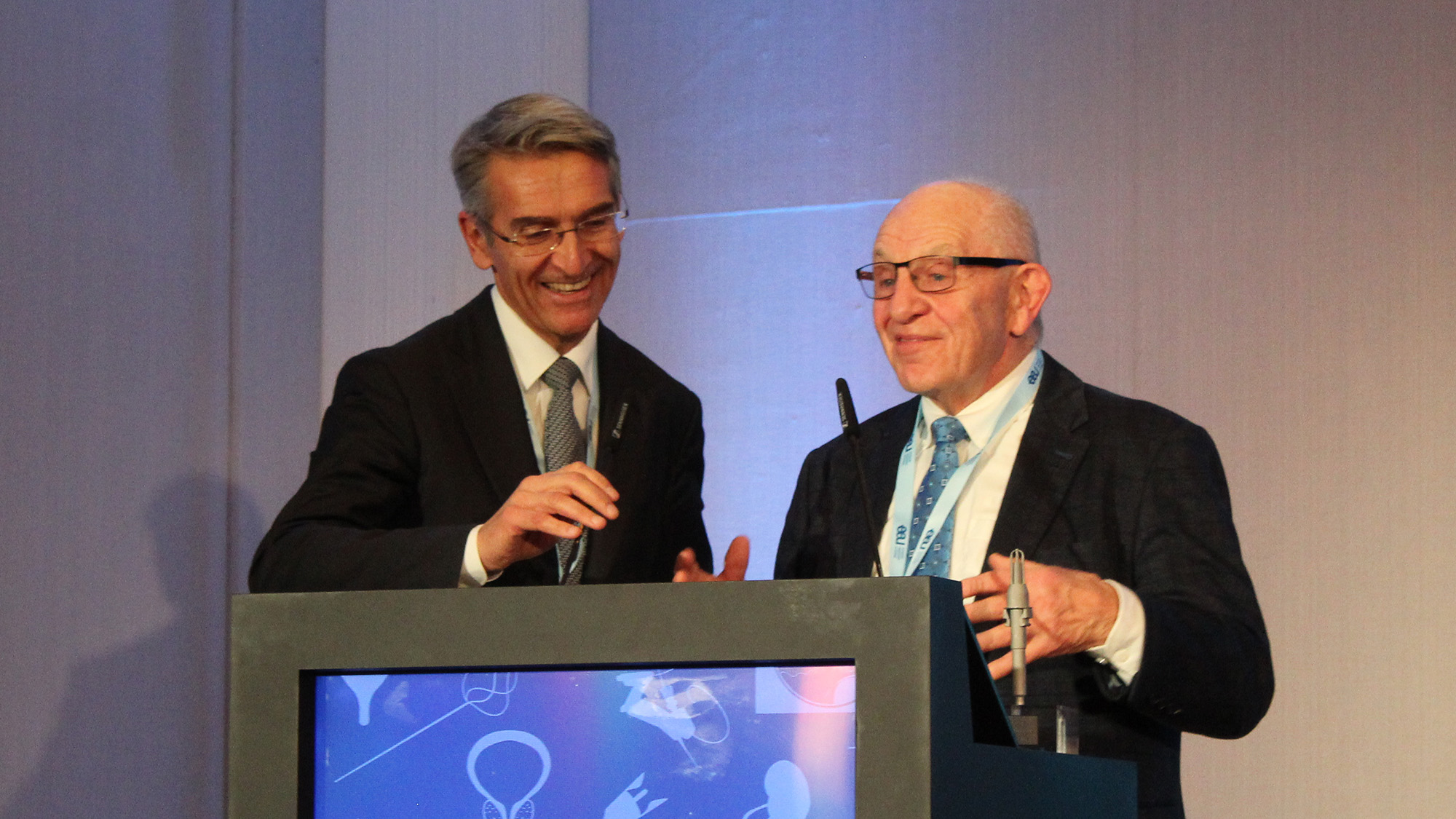
Prof. Traxer on stage with Dr. Altshuler after the latter’s presentation.
He is the inventor of the SuperPulsed thulium fibre laser for urology applications. I was fortunate to participate in its first application in a human patient, in Moscow together with Prof. Martov. I was immediately impressed by this technology. I thought “with this technology we can produce a new generation of instruments.”
We had been using different, less effective lasers for stone treatment, what we now call “traditional” Holmium YAG lasers. These were really at the end of their development with no possibility to improve. The introduction of thulium gave urologists a future for lasers.
Next year, ICE will be held in Valencia, on 8-10 October. Are you and the Endourology Section already looking ahead?
We are very excited to start work as soon as possible, because ICE26 will already be in 11 months. Starting in December we will evaluate ICE25 and start work on the next meeting’s format and the scientific programme.
We will keep some existing sessions but also introduce some new ideas, to not always preserve the same format. That was a key for the success of this meeting, that we didn’t reproduce what was already out there for endourology events. We started with a clean slate, with a different format, and we still have new ideas for next year.